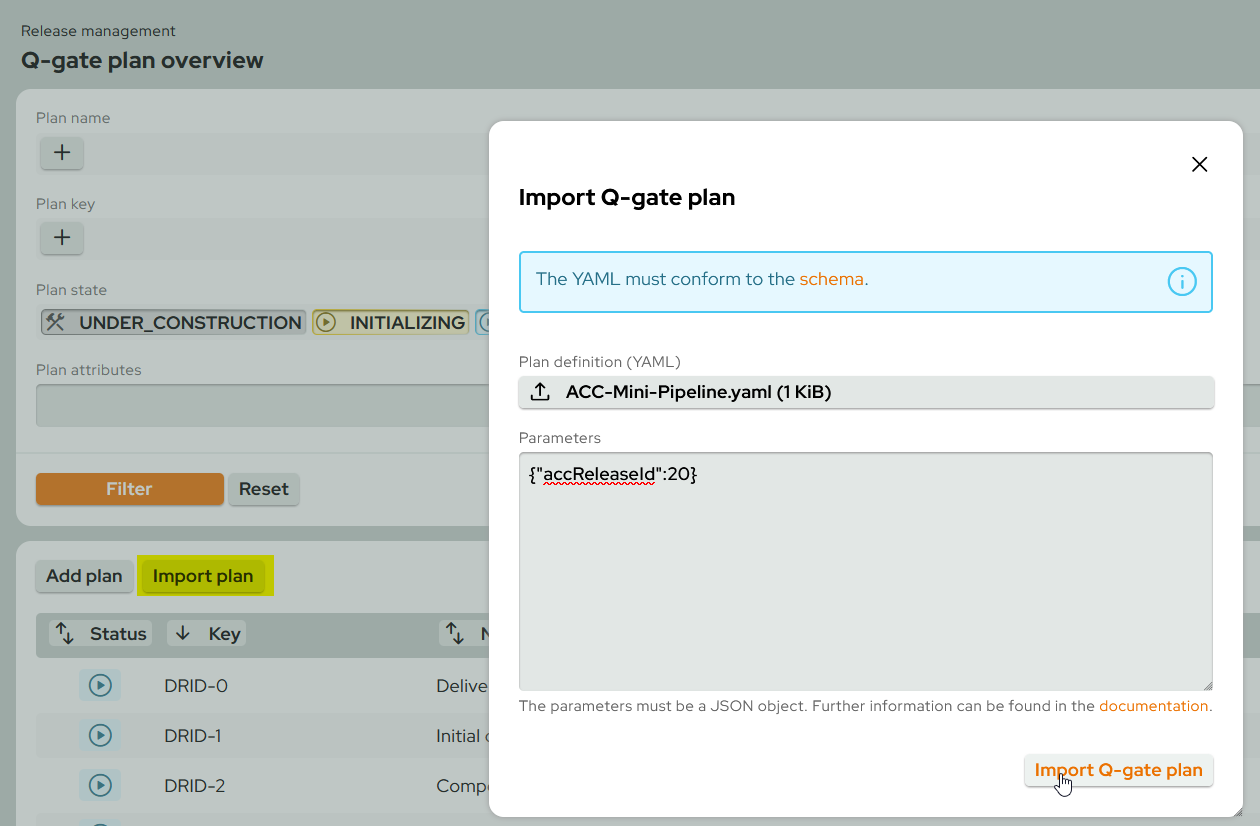
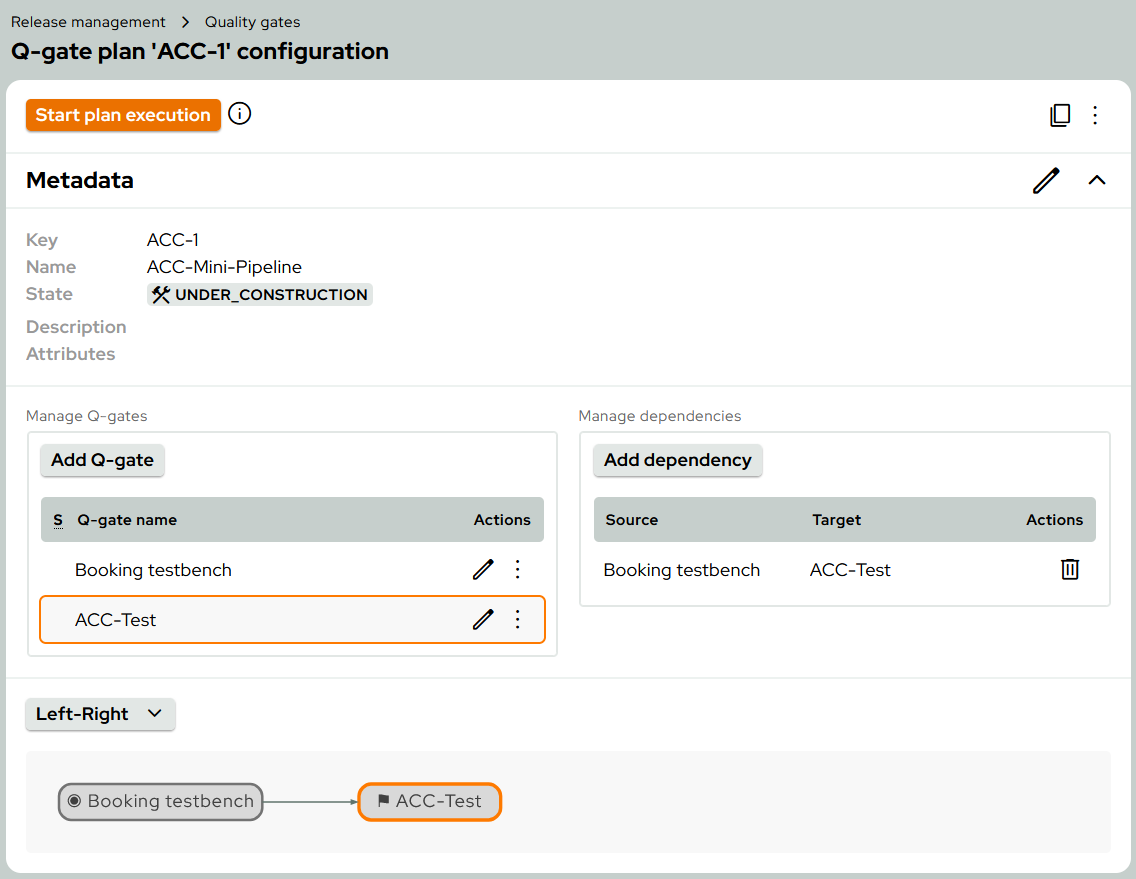
Quality gate plans can now be exported as a YAML file instead of being maintained exclusively through the graphical user interface. This file can be opened in any text editor, customized as needed, and imported back into the system.
During import, the YAML file is automatically validated against a schema file to catch any inconsistencies or typos before the quality gate plan goes live.
Within the YAML description, variables and control structures such as if-else statements can be used. This transforms static plans into flexible templates that can be reused for different releases, projects, or variants.
The corresponding parameters can be specified directly during import. This allows a single plan to cover many use cases.
test.guide 2026 Q2
Quality Gate plans as code
Benefits at a glance
- Quick to customize
Making changes in a text editor is often more efficient than clicking through the GUI – especially for large plans. - Versionable
YAML files can be checked into SCM systems (Git, etc.). - Easily shareable
YAML files can be easily distributed, imported, and reused, for example, as a framework for new plans. - Configurable and flexible
Plans can be tailored precisely to individual requirements. - Validated
Potential errors are reliably identified during import.
Multi-language test reporting
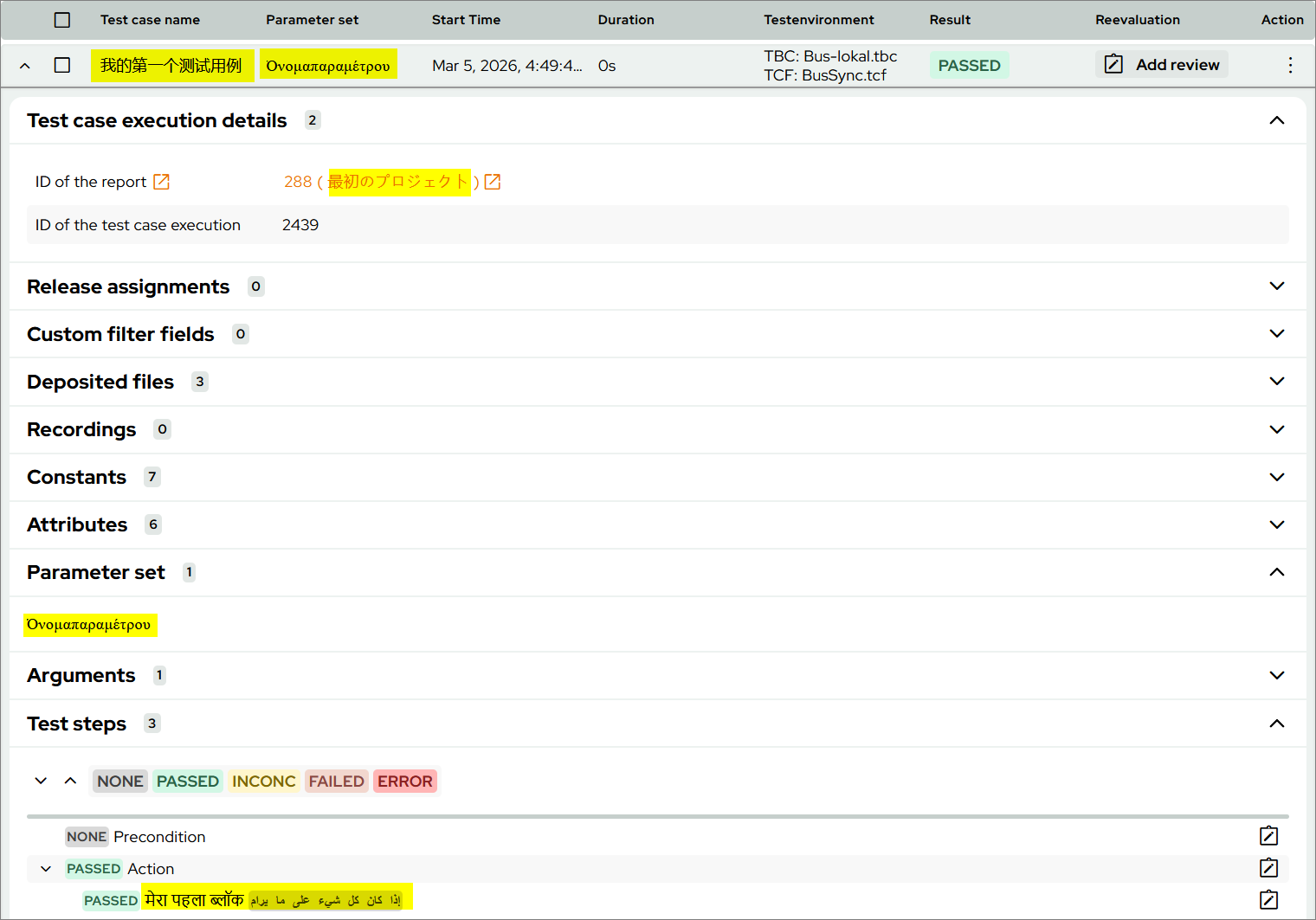
More language flexibility than ever: test.guide now supports additional character sets including Chinese, Japanese, Korean, and Arabic.
Existing workflows remain completely unaffected – the extension only takes effect when explicitly enabled. This can be done in two ways:
Existing workflows remain completely unaffected – the extension only takes effect when explicitly enabled. This can be done in two ways:
- Via the new ATX option in ecu.test: extendedCharacterSupport.
- By using the new upload plugin JSON JSON Report.
This plugin includes extended language support while offering the same functionality as the well-known Json2ATX plugin.
Lightweight execution mode for flow tasks
Workflow automation in test.guide just got a whole lot leaner. Instead of packaging the complete execution environment with every flow bundle, all you need now is the workflow definition itself. test.guide takes care of the rest at runtime – flow.kit, interpreter, and Python dependencies – always in the latest available version.
The benefits are immediate:
Existing flow bundles are unaffected – the new mode only kicks in when you explicitly enable it: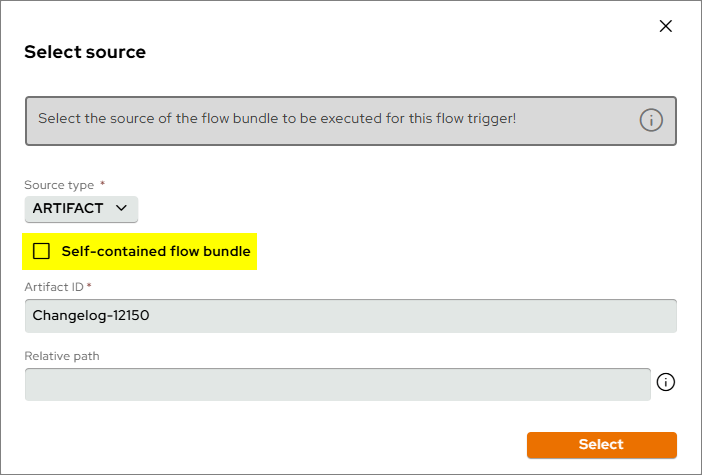
The benefits are immediate:
- Faster execution, thanks to a significantly smaller payload.
- Platform-independent workflows that run on both Windows and Linux runners from a single source.
- An easier on-ramp for new users because the setup process has become simpler.
Configuration
Existing flow bundles are unaffected – the new mode only kicks in when you explicitly enable it:
- In the workflow trigger source, uncheck the following box:
Self-contained flow bundle - Make sure the source includes the flow_definition.py file.
Share calendar events via email
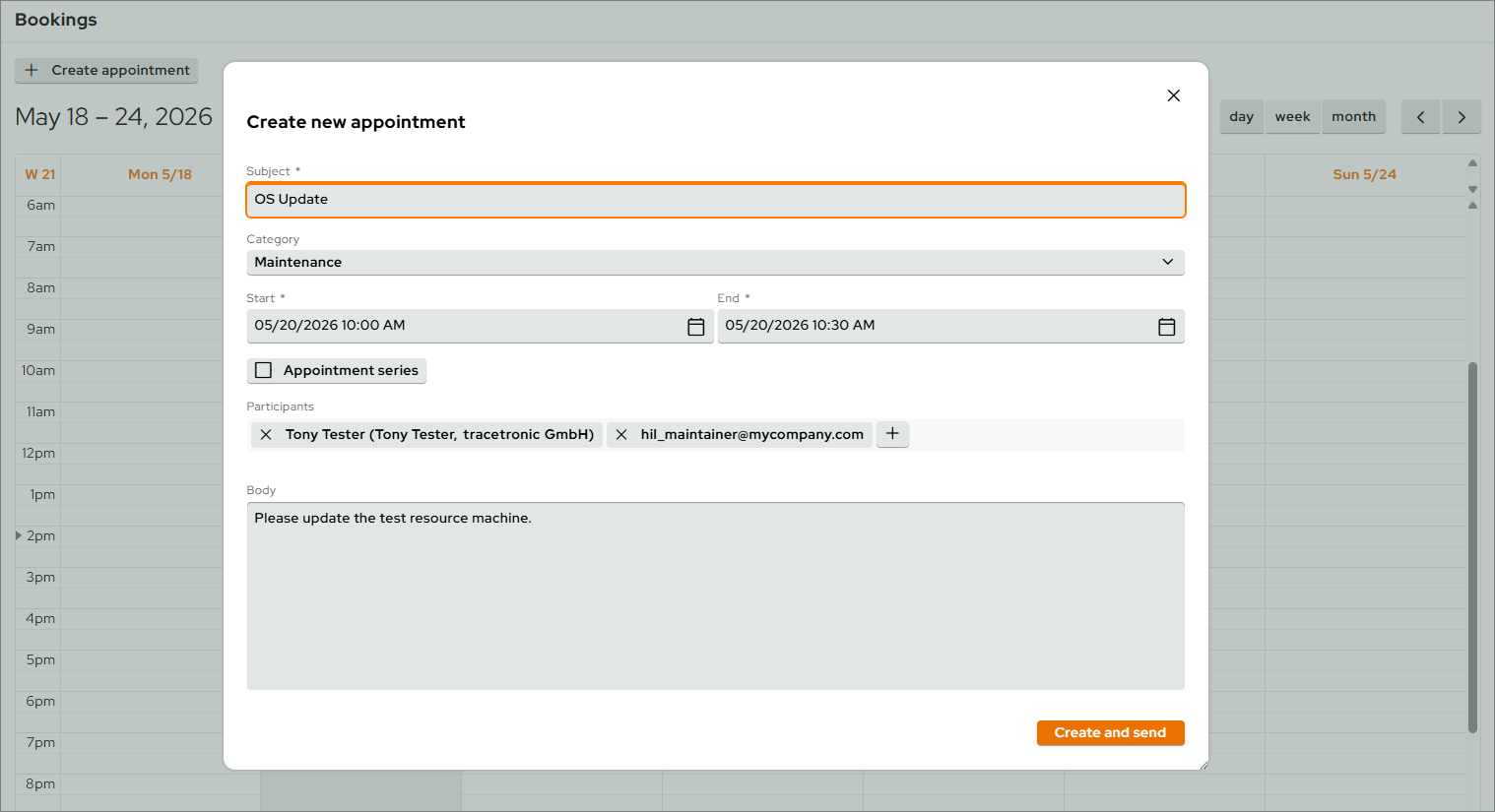
No more manual follow-ups: When appointments in test resource calendars are created, modified, or deleted, all participants are automatically notified by email. The email includes all relevant appointment details and is recognized as a calendar invite by common email applications – so events land directly in participants' calendars.
Notes
Notes
- This feature requires email delivery to be configured in test.guide (Systemkonfiguration → E-Mail).
- Currently, email notifications are supported for single appointments. Support for recurring events is coming in a future release.