- Support for loops
The agent can now recognise repetitive sequences (loops) in the specifications and generate the corresponding test steps. This increases the completeness and realism of the generated test cases. - Visual marking of generated blocks
Each code block generated by the ecu.test agent is now marked with a special icon. This makes automatically generated sections immediately recognizable and easier to check or adjust. - Optimized signal detection
The detection logic for signals (e.g., event triggers, state changes) has been revised. Signals are identified faster and more reliably, resulting in more precise test sequences.
ecu.test Release 2025.4
Highlights at a glance
ecu.test agent
The current release focuses on significantly improving the quality of automatic test case generation. Below is an overview of the most important new features:
- Enhanced ecu.test agent connector
The connector now supports a wider range of large language models (LLMs). This allows different LLM backends to be seamlessly integrated, increasing flexibility and scalability. - Use of tool and port jobs without global mapping
The agent can now use tool and port jobs that were not previously defined in the global mapping. This enables a leaner configuration and reduces the effort required to create mapping entries.
These improvements make the ecu.test agent deliver more robust, easier-to-understand test cases that are better adapted to the respective development environment.
You need more information? Click here:
ecu.test agent webpage
AI‑supported trace analysis with ecu.test agent
We've made getting started with trace analysis even easier! Now, you can describe the desired analysis and have it generated with AI support.Be among the first to test this feature! Send a short email to our support team, and we will activate your early access. We look forward to your feedback!
ecu.test lab
Improved package execution
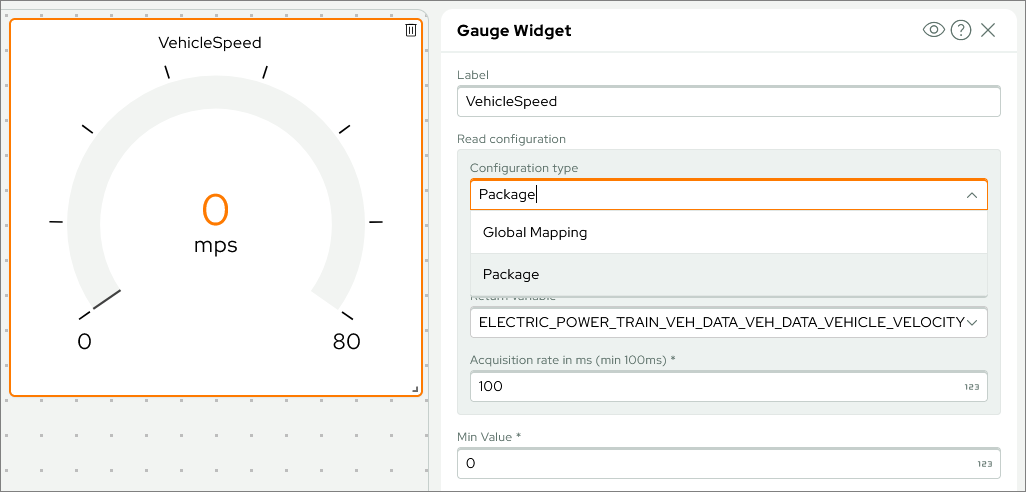
Previously, packages could already be executed from ecu.test lab. However, execution was limited to a few widget types and was accompanied by significant latency. Thanks to new execution logic in ecu.test, it is now possible to execute packages from ecu.test lab much faster.This opens up the possibility of using packages for more use cases in ecu.test lab. As a result, packages are now also available for reading values in bar, slider, gauge, and the new custom widgets.
Custom Widgets
ecu.test lab (short: lab ) already offers a selection of widgets that will continue to expand in the future. Due to the immediate need for more design options and demand for individual widgets, we are now opening lab for your own custom widgets.How it works:
- Widgets are created in HTML/JavaScript and stored in the ecu.test workspace.
- An API provided by us is used to connect to lab in order to supply the widget with measured values and to transfer actions in the widget directly to the test system.
- Custom Widgets are automatically displayed in the lab sidebar, just like the standard widgets, and can be configured there.
- Globale Mappings
- Packages
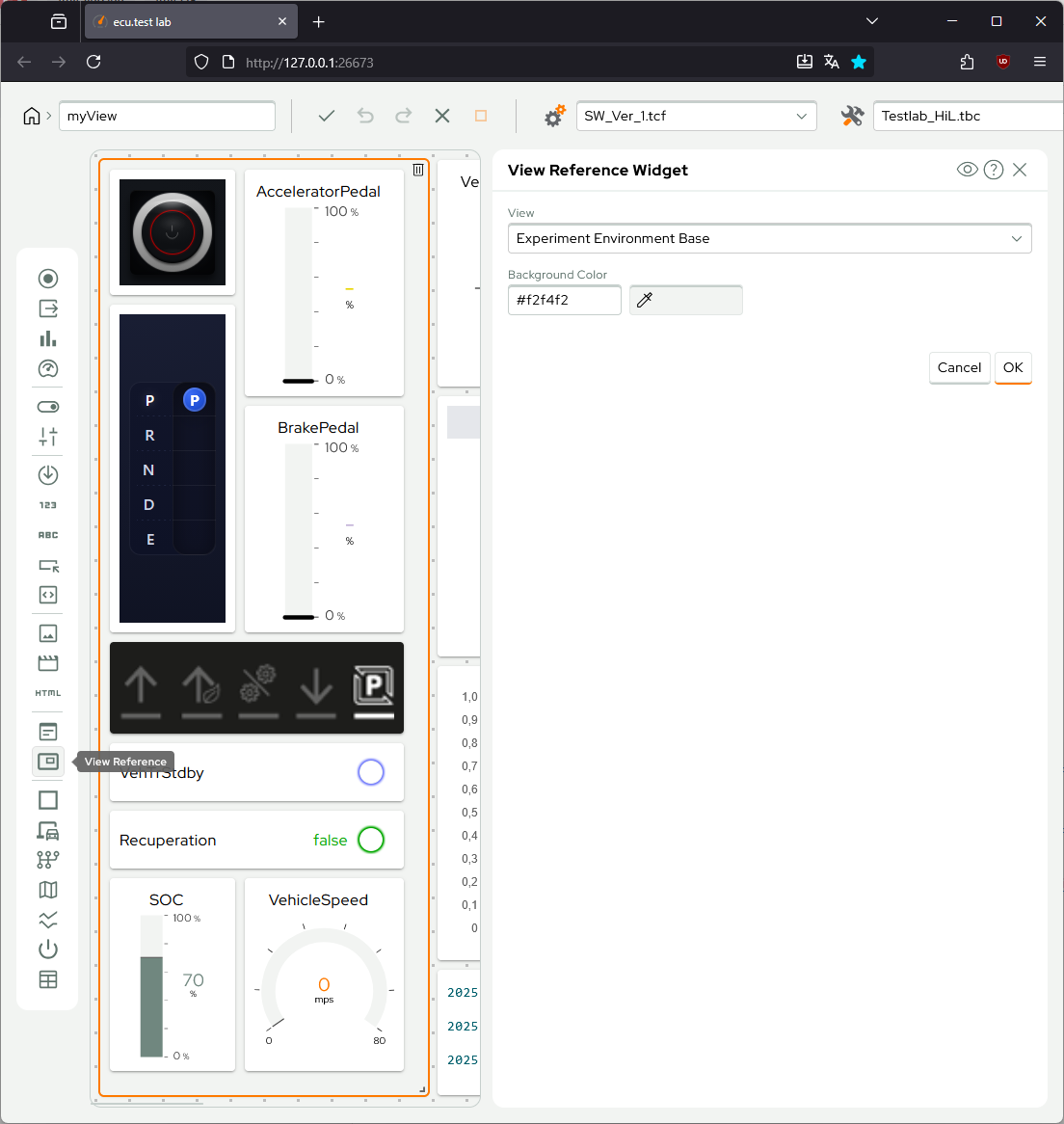
View Reference Widget
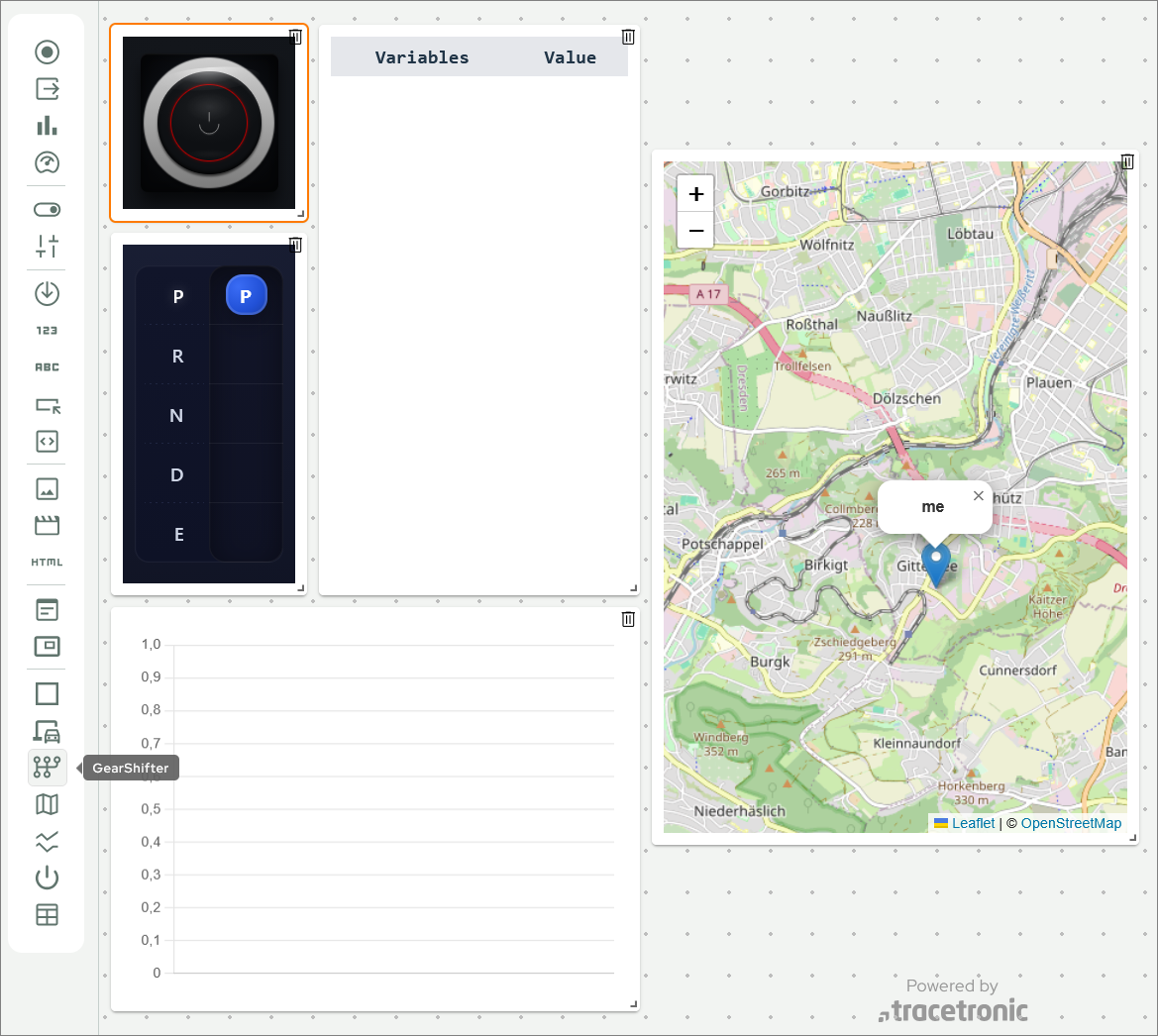
When creating the second view, many users realize that, despite the different use cases, many of the same basic controls are needed for every view.In response to this request, we are enabling the referencing of a (library) view in another view.
How it works:
- The (library) view is created, configured, and maintained like any other view.
- This view can be integrated into any other view using the View Reference Widget, even if it is stored in a library workspace.
- The content of the view cannot be changed as a reference, but it can be used without restriction outside of edit mode.
Specification of measurement lists for signal groups
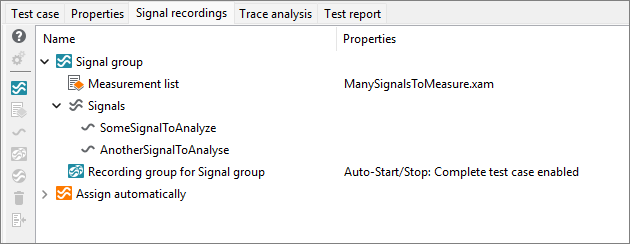
In ecu.test, signals to be recorded can be added in the signal recording area. This can be done either via drag & drop or via Object API.
With a large number of measured variables, this procedure can be cumbersome and inefficient. For this reason, it is now possible to write the signals as mapping variables to an XAM file (already known as the data format for global mappings) and add this file to the signal recording.
This procedure causes all signals in this file to be registered for the respective recording group.
With a large number of measured variables, this procedure can be cumbersome and inefficient. For this reason, it is now possible to write the signals as mapping variables to an XAM file (already known as the data format for global mappings) and add this file to the signal recording.
This procedure causes all signals in this file to be registered for the respective recording group.
ecu.test with Japanese language
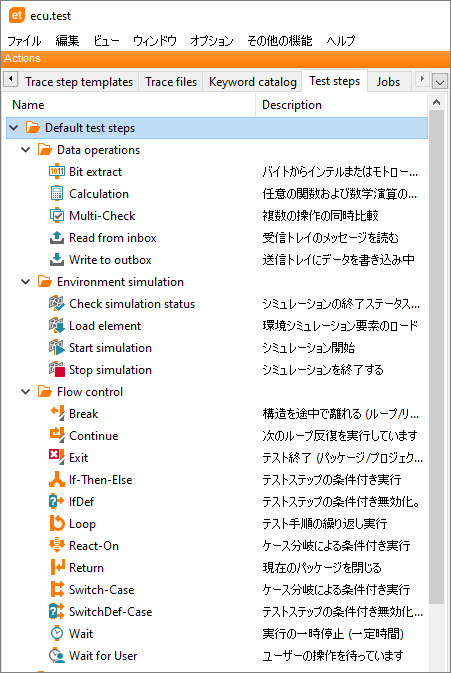
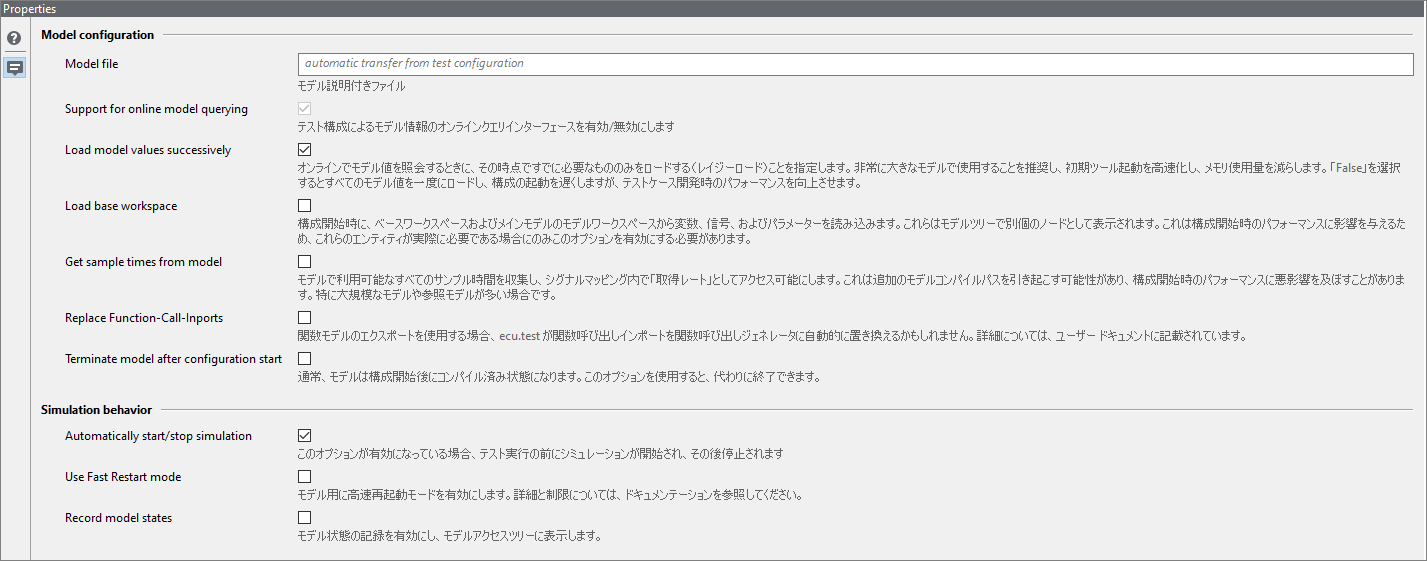
Since June 2025, tracetronic has also been represented in Japan. In line with this, our software now supports Japanese as a fourth language in addition to English, German, and Chinese. Both the user interface and the test case language can now be used entirely in Japanese.
So, Japanese users can use our software in their native language right from the start, which makes it easy and intuitive to use. At the same time, we are strengthening our international orientation and laying the foundation for further local adaptations.
So, Japanese users can use our software in their native language right from the start, which makes it easy and intuitive to use. At the same time, we are strengthening our international orientation and laying the foundation for further local adaptations.